When striving to produce more sustainable food, it's crucial not to compromise on safety. Because as the slogan of the Food and Agriculture Organization of the United Nations says: If food isn't safe, it's not food.
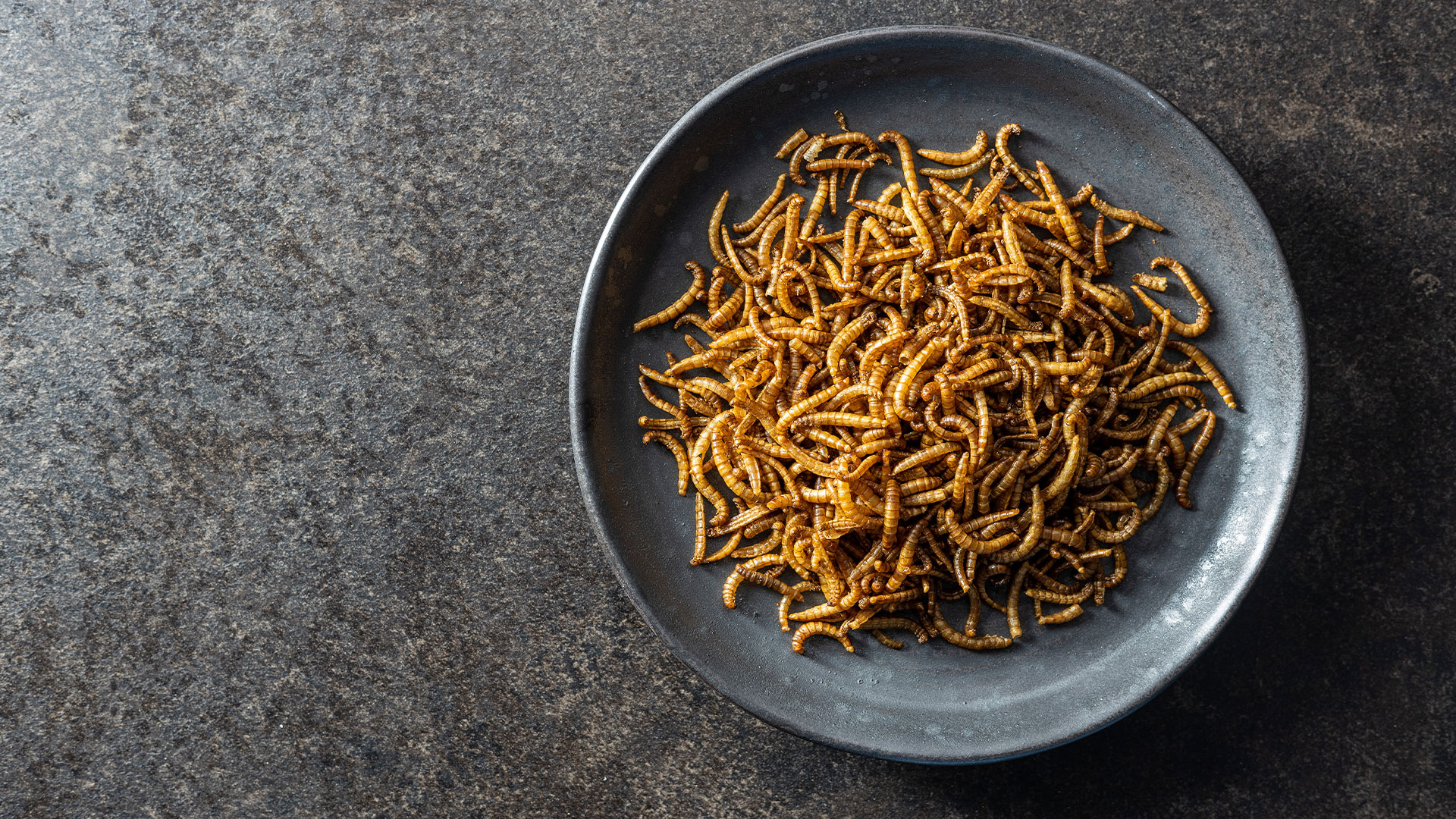
The hunt for foods with a smaller climate footprint could lead us to consider using insects such as meal worms. However, using them requires caution as they appear to be able to trigger cross-reactions in shellfish allergy sufferers. Photo: Colourbox
Tuesday 17 September 2024
Miriam Meister
When British bone meal manufacturers—during the energy crisis in the 1980s—lowered the temperature in the production of meat and bone meal used as supplementary feed for cows and other animals, no one had predicted that decades later this change would result in the loss of hundreds of British lives.
Nevertheless, this was what happened because the lower temperature was not able to deactivate a pathogen in the feed that could cause mad cow disease—first in cows that ate the contaminated feed, and then in humans who ate meat from infected cows.
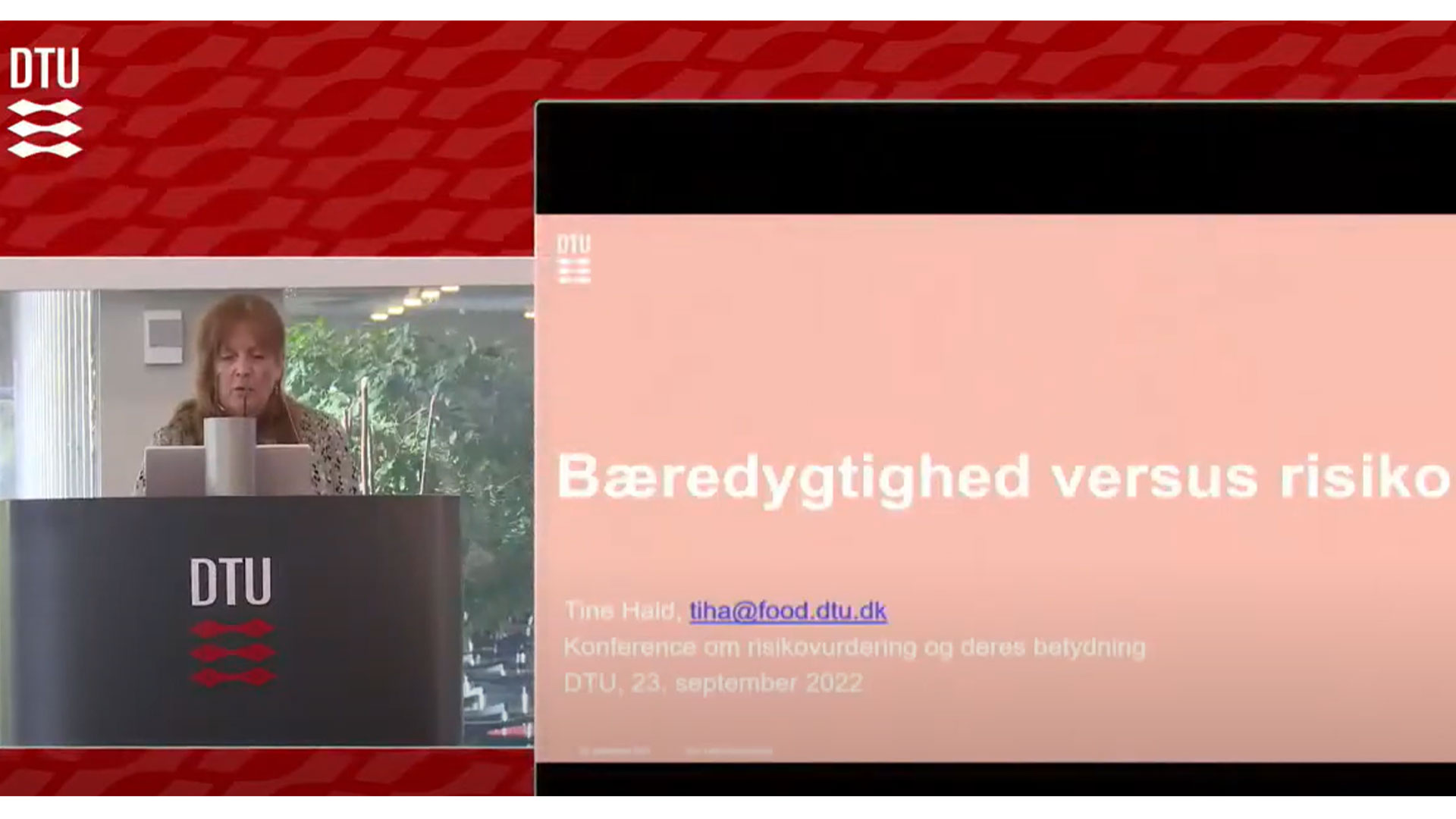
DTU Professor Tine Hald sees this case as a horrifying example of the danger of food safety not being adequately thought through or analyzed before production processes are tweaked—whether in the name of profit or sustainability.
“Each time we change processes or do something new, we need to document the benefits and risks. It's not an easy exercise, but it's necessary if we are to make good decisions,” she says.
Oops, this feature requires cookies
To view the content, you must change your cookie consent to allow functionality and targeting cookies
Hear Professor Tine Hald's presentation on the task of documenting benefits and risks at a conference at DTU Food on the importance of risk assessments.
New dangers?
In the quest for sustainable solutions, it may seem an obvious choice to look towards new food sources or process familiar raw materials in new ways. However, switching to new raw materials or new ways of using old favourites can prove problematic without sufficient knowledge, Tine Hald warns. In the search for more plant-based protein sources for example, one idea could be to make flour from different types of beans that we have not previously used in this way:
“The consequences in terms of safety have not yet been sufficiently examined. On the face of it, it sounds acceptable, but aspects of the new processing methods may not be optimal, for example in relation to toxins or disease-causing bacteria that are not inactivated or are more easily spread.”
The use of insects also requires caution, Professor Katrine Lindholm Bøgh emphasizes, because even if they can be produced safely from a microbiological perspective, it seems that the consumption of e.g. mealworms can trigger cross-reactions in people with a shellfish allergy.
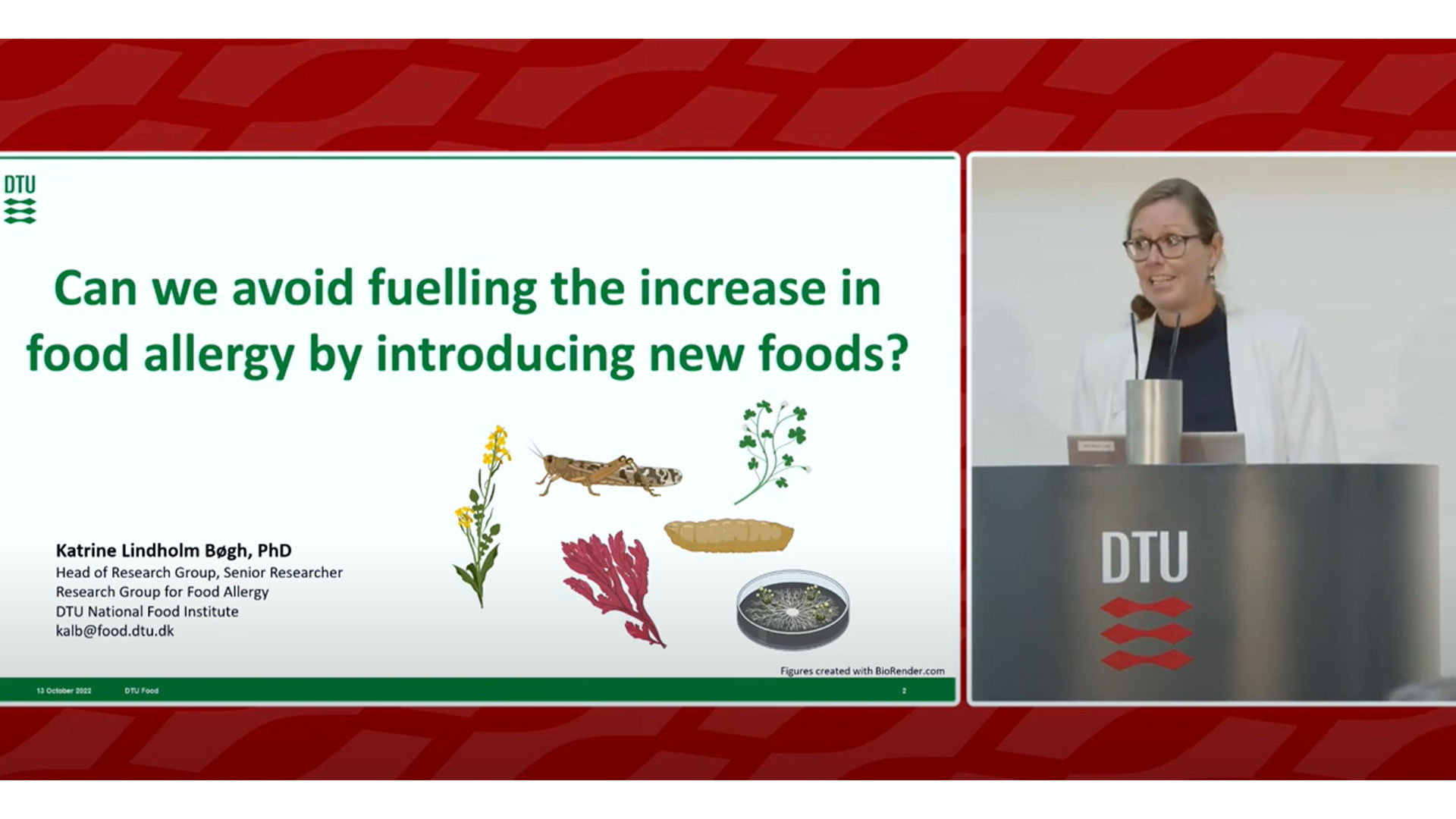
“We will undoubtedly see new allergens emerge as we start eating new foods. The goal should not be to avoid new allergens completely, but to develop tools to screen new foods for their ability to cause allergies to avoid introducing a new peanut,” she says.
Oops, this feature requires cookies
To view the content, you must change your cookie consent to allow functionality and targeting cookies
Listen to Professor Katrine Lindholm Bøgh's presentation at a conference at DTU Food on the healthy, safe and sustainable food of the future.
“We wrap our food to protect it from cross-contamination and extend shelf life, which is good in the fight against food waste, as it requires energy to dispose of all that old food. So, if you're considering removing packaging from a food product, it must be weighed against the risk of increased food waste and decreasing food safety. Reusing packaging can also be a solution, but must be weighed against the use of energy, water and chemicals to clean the packaging before it is reused,” she emphasizes.
Continuing education
Learn more about sustainability and food safety
In future, the food sector will need to produce food that is both sustainable and safe. To equip employees in the sector to take on this task, DTU—in collaboration with UCPH—offers the two-year research-based continuing education programme, Master of Sustainable and Safe Food Production.
The programme gives students the tools to conduct both food safety and sustainability assessments for production lines and end products. It is aimed at both private and public sector employees.
The programme is taught in English and mainly online. As such it is highly flexible, allowing students to study alongside a regular job. Head of the programme at DTU is Professor Tine Hald.
26 pct. of the world's total CO2 emissions come from food production. Livestock in particular account for a large share.
To reduce the climate impact of food production, we need a green transition. This can be achieved through the use of technology, digitalization and the development of new foods.