
For the benefit of society since 1829
DTU Strategy 2026-2031
Mission
DTU develops and creates value through the natural and technical sciences for the benefit of society.
Vision 2031
DTU will be among Europe’s five leading elite technical universities and through excellence in research and education create solutions to the major societal challenges of our time—anchored in democracy, sustainability, and innovation.
Values
DTU’s values—innovative thinking, credibility, and commitment—permeate everything we do.
Innovation drives us forward. We challenge established truths, think across disciplines, and uncover new ways to solve problems.
Credibility is the foundation of our work. We are based on scientific rigour, integrity, and openness. When DTU makes a statement, it is based on evidence—not opinion.
Commitment means we take responsibility. We engage in the major societal challenges, educate the next generation, and engage knowledge.
Different perspectives, backgrounds, and approaches strengthen our research, enrich our study programmes, and bolster our solutions. Diversity turns our values into everyday reality.
Strategy in a changing world
The world is facing a climate crisis, biodiversity loss, resource scarcity, and increasing pollution. At the same time, we face geopolitical instability, authoritarian regimes, and that the knowledge-based understanding of the world is being challenged.
Europe is lagging behind on key technologies such as artificial intelligence, cloud infrastructure, and microchips. But Europe has unique strengths: credibility, ethical anchoring, democratic values, and green transition leadership.
Denmark enjoys positions of strength in areas such as biotechnology, energy technology, medical technology, food technology, quantum technology, and space technology.
Technological development—especially artificial intelligence—fundamentally transforms the way we do research, learn, and create solutions. Artificial intelligence can accelerate solutions to the climate crisis, but is itself extremely resource-intensive. This dilemma places new demands on competences and on the role of our University.

DTU is firmly rooted. We are recognized as one of Europe’s best technical universities thanks to our skilled students, dedicated staff, and strong partnerships. We have leading research environments, educate highly sought-after engineers, and are the preferred partner of the corporate sector.
This strategy is about building on what we are already doing well—and improving it further. We must use our position to take responsibility. To ensure the technological future of Europe, to educate the engineers who will solve tomorrow’s challenges, and to strengthen science as the foundation of democracy.
Our five strategic focus areas:
1.
SUSTAINABLE TECHNOLOGICAL TRANSITION
2.
EUROPEAN LEADERSHIP IN CRITICAL TECHNOLOGIES
3.
EDUCATING EUROPE'S MOST COMPETENT ENGINEERS
4.
FROM KNOWLEDGE TO BUSINESS
5.
SCIENTIFIC LEADERSHIP AND DEMOCRATIC RESPONSIBILITY

1. Sustainable technological transition
These include green energy technology, circular economy, quantum technology, water technology, acoustics, biotechnology, food technology, energy conversion, computing, materials, and space technology.
We take a leading role by:
- demonstrating how focus on sustainability and green innovation can increase Europe’s competitiveness
- ensuring that new technology integrates sustainability from the start
- translating research breakthroughs into businesses, jobs, and real value.
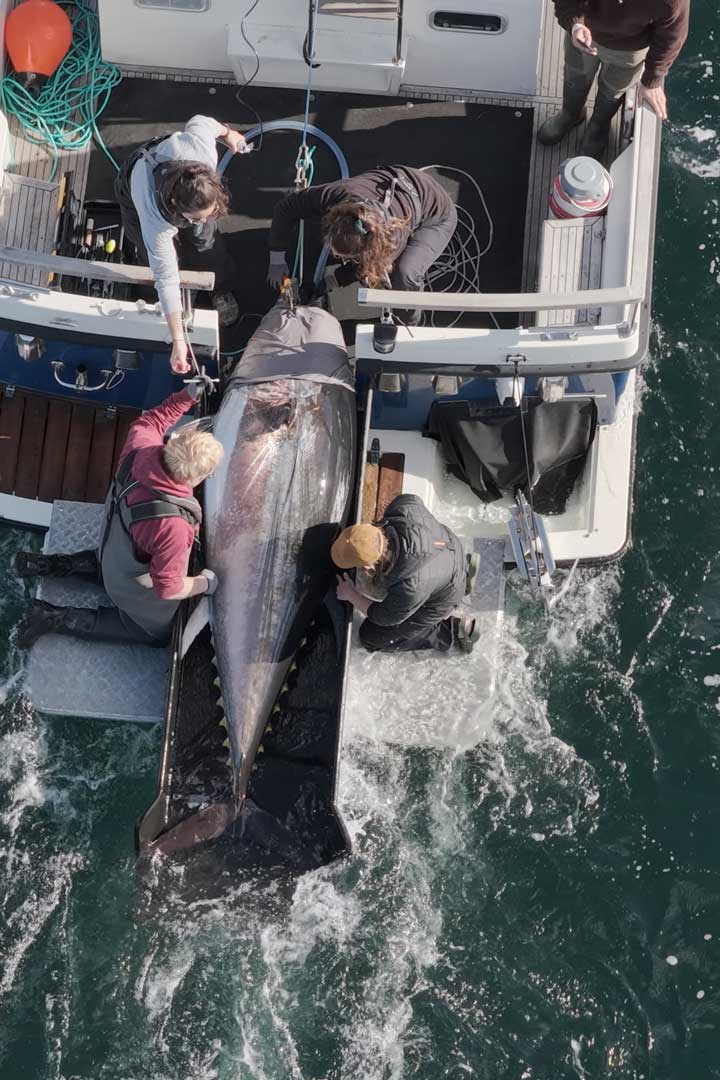

Opt-out
We will not conduct research into technologies that limit or delay the transition to a sustainable society.
We will not develop technologies without transparency about their resource consumption and about whether they have negative derived effects such as increased dependence on authoritarian regimes’ supply chains.
THE EXECUTIVE BOARD MEMBERS PRESENT THE STRATEGY

"For me, sustainable technological transition is about seeing technology all the way through."

2. European leadership in critical technologies
DTU will contribute to European leadership positions in critical technologies.
We build capacity by:
- developing secure, transparent, and democratic artificial intelligence
- educating talents to promote new European leadership positions
- engaging in strategic partnerships with global frontrunners, if it builds European competence
- translating research into businesses, jobs, and real value.


Artificial intelligence is a society-changing technology that can both accelerate solutions and create challenges. We navigate this dilemma consciously.
In our research, we develop the next generation of artificial intelligence with a focus on security, transparency, European values, and resource efficiency. We conduct research into how artificial intelligence can accelerate the green transition—and into the technology’s own climate and resource footprint.
As we navigate new terrain in dual-use technologies and defence research, we ensure transparency and are open about ethical and geopolitical dilemmas.
Opt-out
We will not conduct research into topics that do not have international impact, nor will we participate in projects that do not lead to either scientific insight or societal value.THE EXECUTIVE BOARD MEMBERS PRESENT THE STRATEGY

"Critical technologies all contribute to the resilience of our society."

3. Educating Europe’s most competent engineers
DTU will educate engineers and researchers who can apply critical thinking, are creative, collaborative, and able to navigate complexity.
We will pioneer the future of learning by:
- investigating and implementing new forms of learning
- experimenting with alternatives to traditional exam forms
- designing study programmes where digital tools free up time for deep learning
- collaborating with foundations to translate research into education
- educating for lifelong learning
- building lifelong relationships with alumni
- learning innovation through hands-on business creation.
Our graduates must stand on a solid polytechnic foundation and be prepared for the challenges of the future. They must think critically and creatively and be able to collaborate across disciplines, cultures, and sectors.
They must think critically and creatively and be able to collaborate across disciplines, cultures, and sectors.
They must be able to drive change with ethical responsibility and navigate complexity while creating confidence in development processes. They must learn that risk management is a balance where avoiding any risk in itself can be risky. Finally, they must master digital technologies with a critical and responsible approach so they can use them to create value for society.
Opt-out
We will not offer narrow technical specializations without interdisciplinary understanding. We will not offer research careers that do not also emphasize teaching, dissemination, and collaboration.
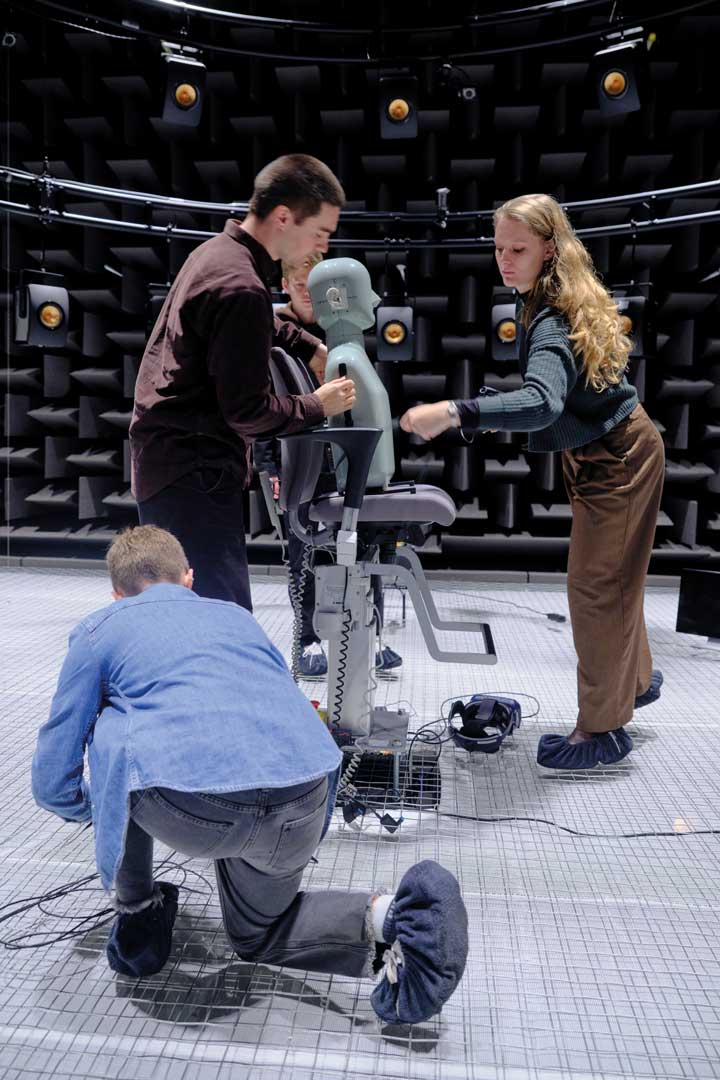

THE EXECUTIVE BOARD MEMBERS PRESENT THE STRATEGY

"The strategy means that education will play an even more prominent role in DTU's way of taking responsibility for society."

4. From knowledge to business
The transition from laboratory to market, from theory to application, from discovery to business has been at the heart of our societal mission since 1829.
We create value by:
- expanding and strengthening our infrastructure for innovation, the start-up and scaling of businesses
- accelerating the implementation of sustainable technologies through European partnerships
- integrating innovation into all our study programmes
- creating companies that solve societal challenges
- contributing to the business community being able to implement new technology competitively and responsibly
- being a strategic partner for Danish and European companies
- contributing to innovation in the public sector
- ensuring that DTU’s inventions are actively exploited for the benefit of society.
We demonstrate that innovation can be pursued transparently, ethically, and with democratic control. Our innovation processes engage citizens, authorities, and civil society—not just investors and businesses.
Opt-out
We will not transfer knowledge that weakens European independence. We do not consider commercialization to be opposed to research.
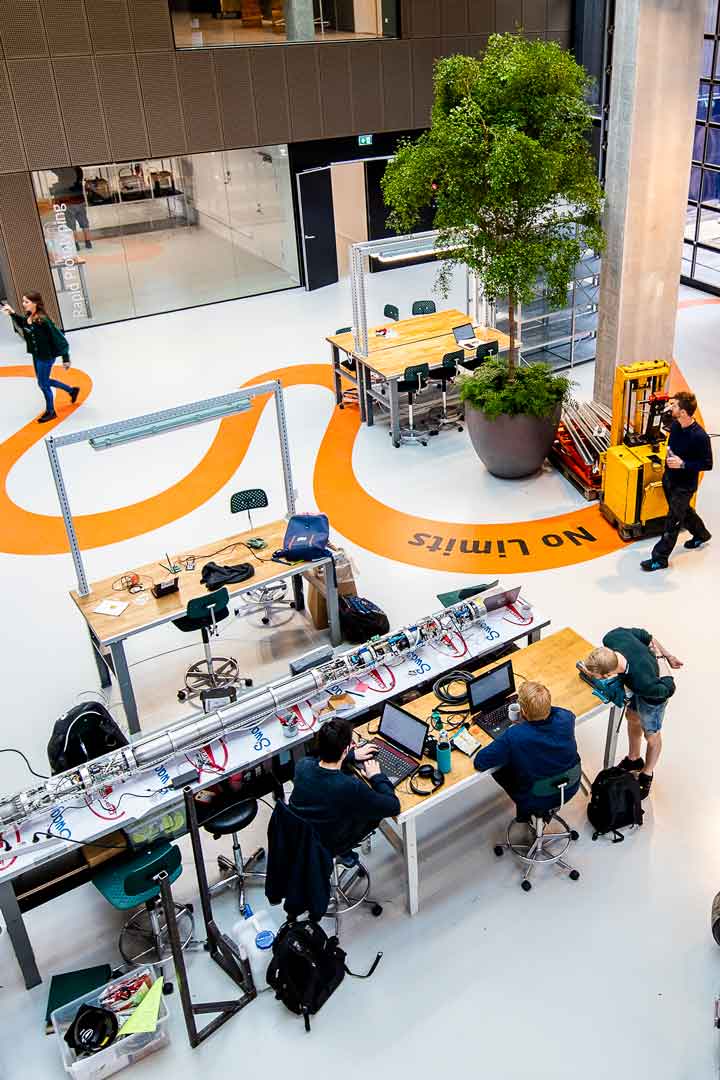
THE EXECUTIVE BOARD MEMBERS PRESENT THE STRATEGY

"Innovation is crucial for the translation of knowledge from research and education into concrete solutions."

5. Scientific leadership and democratic responsibility
We will guard knowledge and evidence by:
- countering misinformation and ensuring informed technological choices
- conducting research with the highest integrity and sharing knowledge openly
- educating critically thinking citizens
- actively participating in the public debate
- inspiring participation in societal discussions on a well-informed basis
- advising on the basis of scientific excellence, integrity, and evidence.
We work to ensure that complex technological choices can be discussed in an accessible and factual way, so that everyone is able to understand and participate in the debate.
Research ethics and transparency form the foundation of our work, and our voice is always based on evidence—never on opinion.
We educate citizens who can navigate in a technology-driven democracy in an informed way, and we demonstrate in practice that responsible innovation not only strengthens democracy, but also Europe’s competitiveness.
Opt-out
We do not develop technology without prior democratic dialogue. We do not abstain from the social debate about technology in a broad sense.
THE EXECUTIVE BOARD MEMBERS PRESENT THE STRATEGY

"We must conduct research with high integrity, and we must share our knowledge even more than we do today."
Foundation to succeed
RESEARCH EXCELLENCE
World-class research is at the heart of DTU’s activities and the foundation for our study programmes, innovation, and social contribution.
Research excellence at DTU is:
- curiosity-driven and socially relevant
- interdisciplinary and collaborative
- internationally competitive
- supported by robust infrastructure.
FOCUS ON WORK AND LEARNING ENVIRONMENT
We prioritize well-being and a healthy working and learning environment; a management and a culture that clearly forms the basis for employees and students to unfold their potential and deliver results at the highest level.
We develop management and administration to free up resources for teaching and research and to reduce the administrative burden on the individual researcher and lecturer.
We work actively with framework conditions in close dialogue with political principals, the foundation world, the Danish business community, and European partners.
We ensure a healthy and long-term balance between public and private financing. Basic funding is the foundation for freedom of research and our overall capacity.
THE EXECUTIVE BOARD MEMBERS PRESENT THE STRATEGY

"We need to build on our strengths, learn from each other, and create settings that make it easier for us to succeed."
